
Michael E. Stern


About Michael e. Stern
Michael e. Stern was born in North Hollywood, California, and grew up in the sunlit neighborhoods of Sun Valley, absorbing the endless Southern California light that would someday illuminate his art. Early encouragement from his parents nurtured his budding love for photography—a family inclination, it turned out; his maternal grandfather was both a successful portrait photographer and violinist. Yet Michael’s journey was not without turbulence. As a teenager, life-threatening surgery left him with physical limitations that reshaped his ambitions, sending him into a period of youthful self-destruction. Salvation came from the lens: in college in Pasadena, his love for photography flourished, realigning his sense of purpose.
The seed had been planted long before. At age 12, Michael entered a photography contest and won—earning $25 and seeing his photograph on the front page of the local paper. The thrill of creating images that resonated with others became a guiding north star, one that would sustain a remarkable 43-year career in commercial photography and filmmaking. Michael refined his technical skills through hands-on experience: shooting for the school yearbook and newspaper throughout his early academic years, and later, at Pasadena's Art Center College of Design, where his commitment to the craft solidified beyond any doubt.
Business acumen was learned on the fly: he dove into the world of self-employment as a commercial photographer armed with charisma, optimism, and sheer belief. His niche soon emerged—serving businesses within thirty miles of his base, forging lasting ties within his community. Yet, the specter of his youthful trauma never entirely faded. Michael's work was (and remains) inspired by a refusal to let his health define his present. His photography became both a lifeline and a launchpad—a way to forge the good life on his own terms.
Michael's creative philosophy is a lyrical homage to the Pictorialist movement of the late 19th century, favoring emotional resonance over strict documentation. The artistic philosophy of painters James McNeill Whistler and George Inness, leaders of the Tonalist movement emphasized mood, atmosphere and subjective emotion over realistic detail. These ideas when applied to the art and craft of photography helped convey an emotional response as a poet may do.
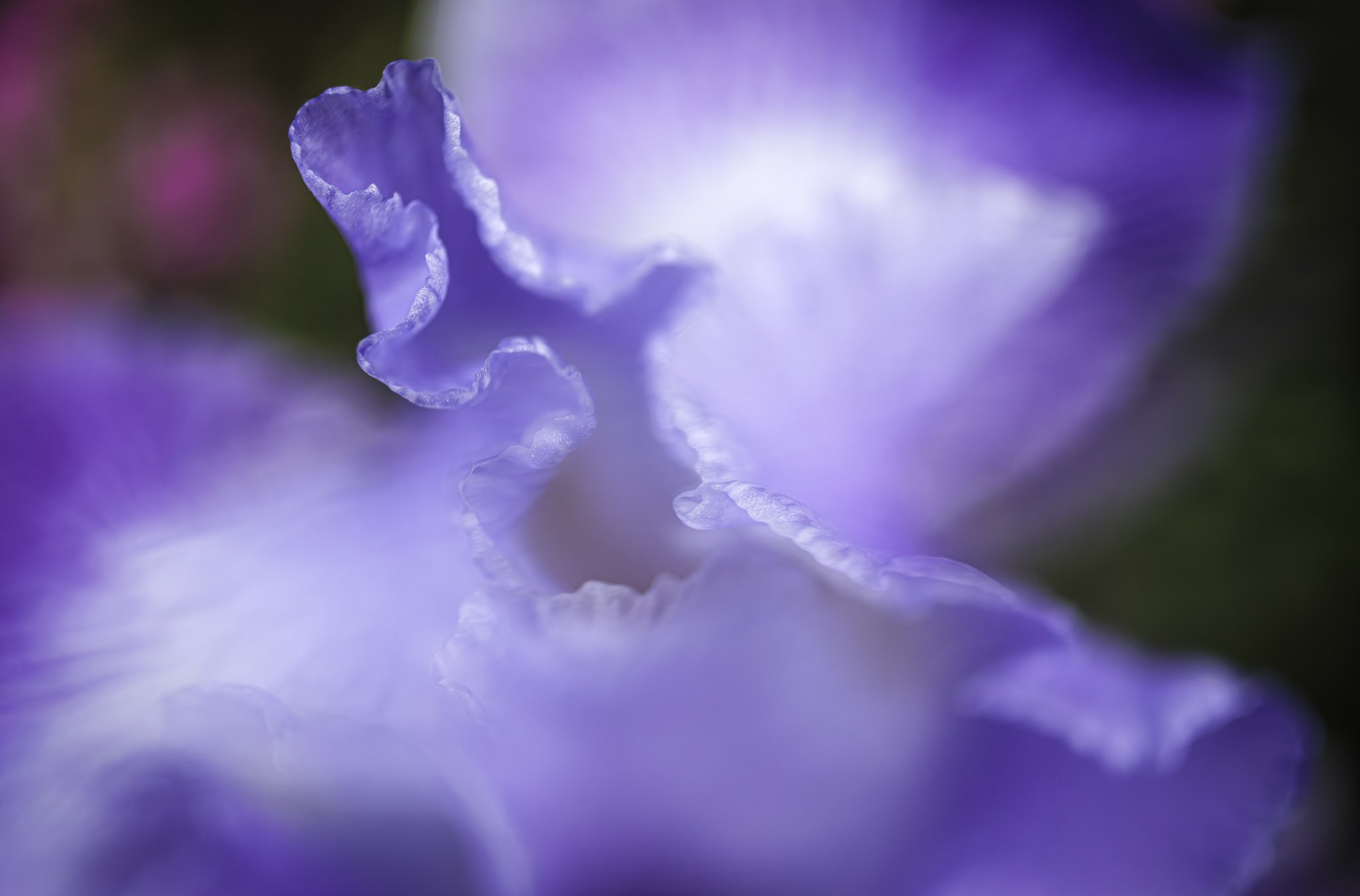
As Michael worked he developed the distinctive signature of natural light and specialized lens stacking to produce his multi-plane abstract macro images. His process diverges sharply from the traditional macro photography playbook—eschewing artificial light, focus stacking, or clinical clarity in favor of an immersive and atmospheric experience. As a curator once wrote him, "When I try to focus on the macro gestures, they seem abstract. When I try to see the abstract, the macro gestures come forth. This is strange. It is as if there is something quantum mechanical in the approach, like the idea that particles change their behavior when we observe them and change it again when we stop observing them."
Much of Michael's recent work finds its genesis mere steps from his own back door. As he puts it, almost all his macro-abstract images are made from subjects grown in his home garden: "Same subjects photographed multiple times in different light and life cycles has provided a treasure trove of interesting photographic moments." This philosophy of sustained localism, which once made commercial sense, now gives rise to a meditative, exploratory process—each flower or insect rendered anew by atmosphere, angle, and mood.
Among his most personally significant projects was "Remnants," which began in 2000 when Michael scanned and colorized his own x-ray and MRI films—a decades-long artistic journey through trauma and healing that proved both cathartic and visually compelling. The body of work expanded to include scanned detritus, yielding images of haunting, sculptural beauty, and ultimately blossomed into his current practice.
Influences range from Victor Keppler to Hiroshi Sugimoto and Ansel Adams to the Pictorialists. Michael's art has found its way into private collections and inspires fervent discussion at his preferred private showings, where viewers can steep themselves in the work's intimacy and complexity.
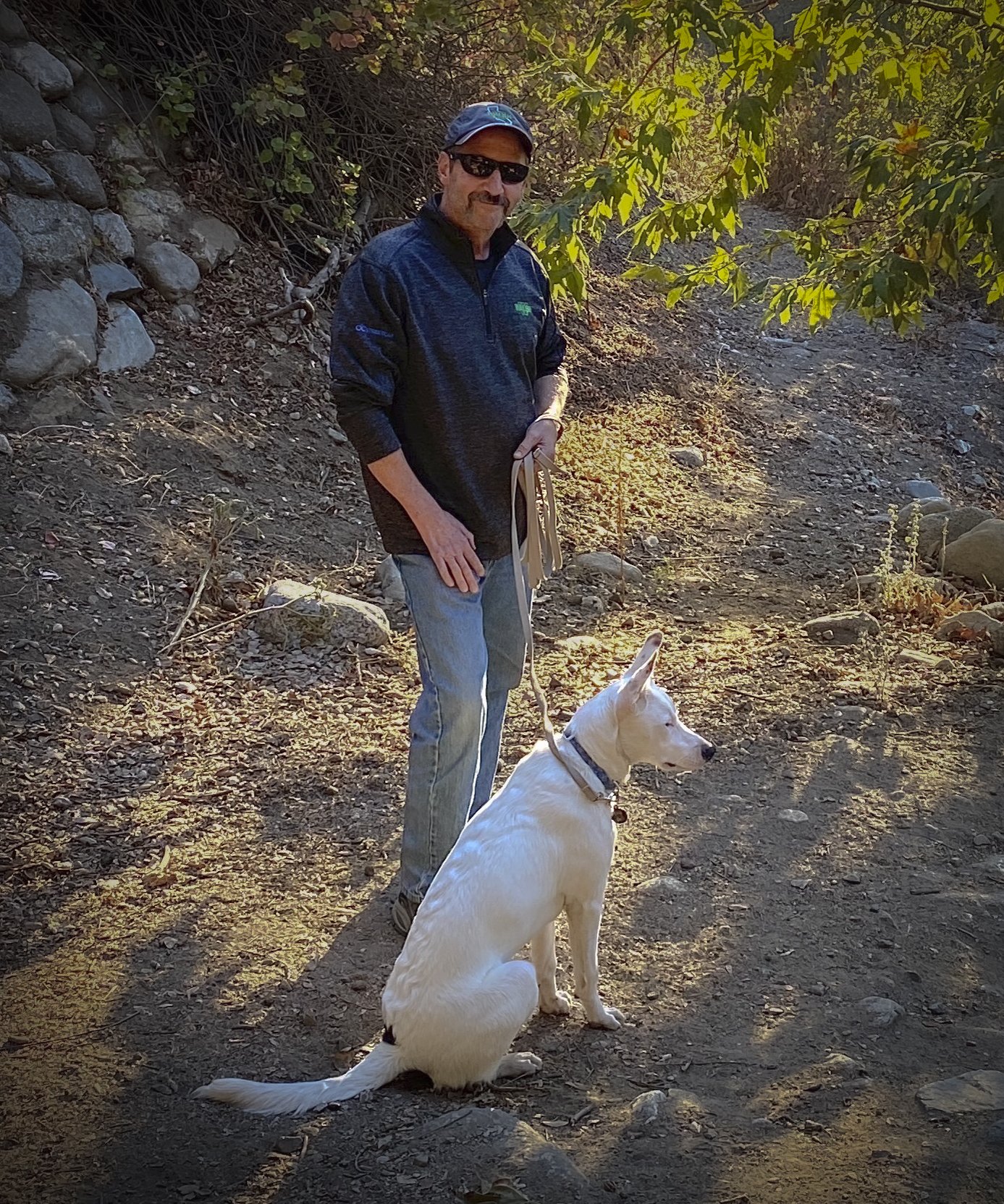
Now enjoying a quieter, post-commercial phase of life—splitting his time between gardening, being a "dog dad," and the weekly competitive bowling match—Michael pairs his photographic journey with roles as a private tutor and research recruiter, calling upon the entire range of his creative and analytical faculties. For Michael, the ultimate hope is that his work occupies spaces—from galleries and corporate offices to restaurants and private homes—where viewers might linger, experience, and ultimately feel transformed, just as he was those many years ago behind a viewfinder in sun-soaked Southern California.